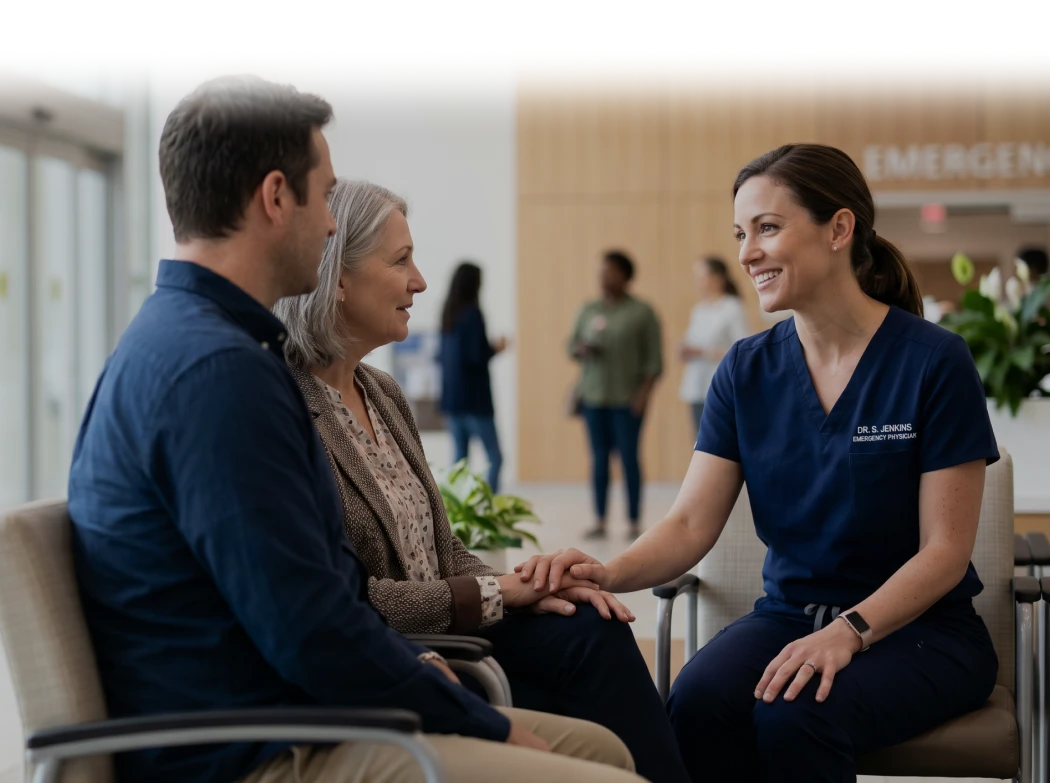
Emergency Medicine

Locum Tenens Jobs & Staffing Solutions

The Role of Emergency Medicine Clinicians

Emergency medicine is the specialty built for the unpredictable—managing everything from minor injuries and pediatric fevers to trauma activations, cardiac arrest, stroke, and sepsis. The door is always open, and someone has 
to be there.

More than 150 million emergency department visits occur annually in the United States.

Emergency Medicine and Coverage Settings

  • Hospital-based EDs (Level I–IV Trauma Centers)
  • Critical Access Hospitals
  • Fast Track and Urgent Care Areas
  • Freestanding Emergency Rooms
  • Pediatric Emergency Departments
  • Academic and Teaching Medical Centers

Subspecialties:

  • Emergency Medicine
  • Pediatric Emergency Medicine
  • Emergency Medicine NPs and PAs
Clinicians

Work in Emergency Medicine, 

on your terms.

Locum tenens in emergency medicine means you’re not waiting for the right opportunity — you’re building it. Choose when you work, where you go, and what comes next. Barton coordinates licensing, credentialing, travel, and onboarding so you can focus on the work.

Pediatric Emergency Medicine

Pediatric emergency medicine (PEM) is a fellowship-trained subspecialty focused on the acute care of ill and injured children — covering neonatal resuscitation, pediatric trauma, respiratory distress, and seizure management in dedicated pediatric EDs, children’s hospitals, and pediatric trauma centers. Certification requirements and clinical scope are meaningfully distinct from general EM, and compensation reflects both the additional training and limited supply of fellowship-trained PEM physicians.

Family Practice Physicians in Emergency Medicine

In rural and critical access hospitals, family medicine physicians with emergency medicine experience play an important role in maintaining emergency department coverage. Many of these facilities rely on family medicine-trained clinicians to care for patients in the ED, and Barton places board-certified family physicians in emergency medicine roles where facility requirements and state regulations allow.

Emergency Medicine Compensation Insights

EM locum compensation is driven by shift structure, volume, and setting. Rural and critical access assignments consistently command higher hourly rates than urban or suburban 
EDs — demand is high, providers are thin, and coverage is often solo. Pediatric EM and overnight shifts carry additional premium across most markets.


Healthcare Organizations

The match is step one. 

Barton is built for more.

When an EM shift goes uncovered, there is no fallback. The department runs short, patients wait longer, and the clinicians who show up absorb the load. Barton fixes the friction, not just the vacancy.

Find Coverage

Precise Match Accuracy

Clinicians matched on board certification, procedural scope, 
setting type, volume tolerance, and licensing — aligned to your patient population, acuity level, and coverage model. A solo overnight at a critical access hospital and a day shift in a high-volume Level I trauma center require different clinicians. Every placement is built around 
that distinction.

Speed to First Submittal

Qualified emergency medicine physicians, nurse practitioners, and physician assistants submitted in under five days, not five weeks. 

Credentialing Without Friction

Barton manages licensing, credentialing, and onboarding end to end — including ABEM/AOBEM board certification verification, ATLS/ACLS/PALS confirmation, and emergency privileging pathways where applicable. One partner, start to finish.

That's why facilities and clinicians choose Barton.

With a nationwide network of emergency medicine professionals and a specialty-focused matching approach, Barton handles everything from first match through final shift — licensing, credentialing support, deployment, and ongoing coordination — without friction or delay.

  • 25+
    Years of Experience
  • 1M+
    Pre-vetted Clinicians
  • 50
    State Coverage
  • 83%
    Faster Credentialing
  • 4.6/5
    Trustpilot Rating

Explore Related Specialties

Emergency medicine often intersects with adjacent acute care and surgical disciplines. If your needs span multiple specialties or fall outside what’s listed here, we can help with that too.

Emergency Medicine Locum Tenens FAQs

Emergency medicine locum tenens clinicians are temporary providers who deliver short-term or ongoing shift coverage for hospital-based emergency departments, critical access hospitals, freestanding ERs, pediatric emergency departments, and urgent care settings experiencing staffing gaps, physician leave, or increased patient volume.
Emergency medicine is the medical specialty focused on the immediate evaluation, stabilization, and treatment of acute illness and injury across all ages and acuity levels — managing everything from minor injuries to life-threatening trauma, cardiac arrest, stroke, and obstetric emergencies, 24 hours a day.
Pediatric emergency medicine is a fellowship-trained subspecialty focused on the acute care of ill and injured children. PEM physicians practice in dedicated pediatric EDs, children’s hospital emergency departments, and pediatric trauma centers, managing neonatal resuscitation, pediatric trauma, respiratory distress, and seizure disorders.
Yes, in many rural and critical access settings. Critical access hospitals frequently staff their EDs with board-certified family practice physicians with emergency experience, and many state licensing and facility credentialing frameworks accommodate this. Barton places FP-trained clinicians in EM roles where facility requirements and scope-of-practice allow.
General EM shifts across Level I–IV trauma centers, critical access hospitals, fast track and urgent care areas, freestanding ERs, and pediatric emergency departments. Pediatric EM roles in children’s hospitals and academic medical centers. Overnight, weekend, and holiday coverage across all settings.
Most EM roles require BLS, ACLS, and ATLS. PALS is required for any setting seeing pediatric patients. Board certification through ABEM or AOBEM is standard for EM-trained physicians. Some rural and critical access facilities accept board certification in family medicine or internal medicine with demonstrated EM experience.
EM locum compensation is driven by shift structure, volume, setting, and geography. Rural and critical access assignments consistently command higher hourly rates than urban EDs. Overnight shifts, solo coverage roles, and pediatric EM positions carry additional premium. View Emergency Medicine Salary Guide
Yes. Barton manages licensing, credentialing, and onboarding from start to finish — including board certification verification, ATLS/ACLS/PALS confirmation, and emergency privileging pathways where applicable.
Hospital-based EDs across all trauma levels, critical access hospitals, fast track and urgent care areas, freestanding emergency rooms, pediatric emergency departments, and academic and teaching medical centers.
Yes. NPs and PAs are established members of EM teams across all settings, functioning in independent and collaborative practice models depending on facility bylaws and state scope-of-practice. Fast track and urgent care areas within EDs frequently rely heavily on APP coverage.

Find work. Fill the gap.
Start here.

Whether you’re stepping into a role or filling one, Barton gets you there faster — with the right fit from the start.

Explore all specialties that Barton supports

12 high-demand specialties and 149 subspecialties.