17 September, 2024
It’s been more than four years since the onset of the COVID-19 pandemic—an event that changed the world and put immense strain on the United States’ healthcare system. While people continue to become infected with COVID-19 across the globe, a combination of vaccines and preventative measures have loosened the disease’s grip on society, reducing disease incidence and symptom severity.
With almost half a decade passed since the world shut down in March 2020, we were interested in seeing whether the COVID-19 pandemic had any influence on healthcare providers’ decision to consider taking locum tenens assignments. We asked 390 physicians, physician assistants (PAs), nurse practitioners (NPs), dentists, and certified registered nurse anesthetists (CRNAs) in our network this very question—continue reading to hear what they had to say.
Of the 390 doctors, NPs, PAs, dentists, and CRNAs surveyed, 33% of them attributed their consideration of locum tenens assignments at least in part to the COVID-19 pandemic.
More specifically, 9% (35 providers) said the COVID-19 pandemic was directly responsible for why they consider locum tenens assignments, while an additional 24% (93 providers) said the pandemic increased their willingness to consider locum work.
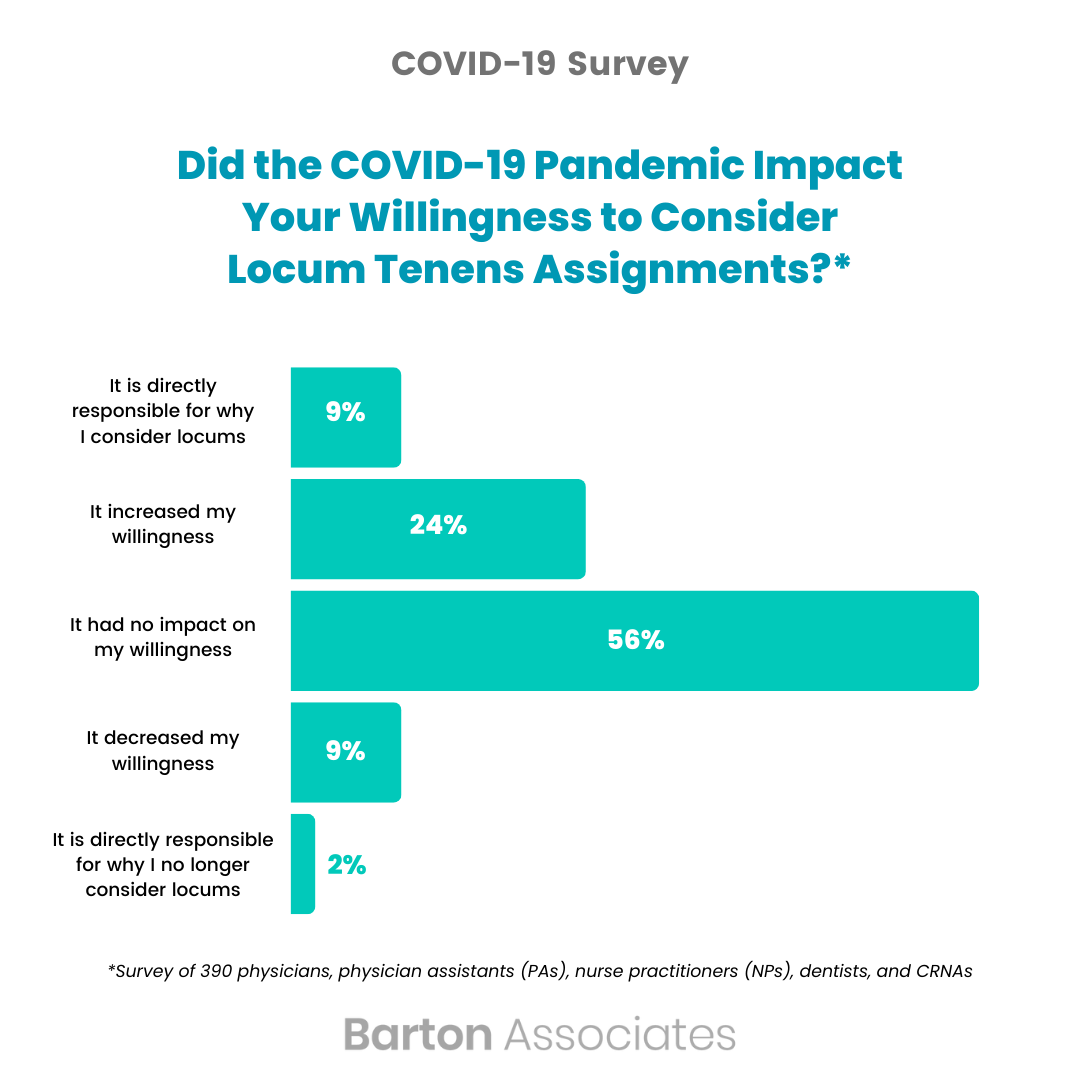
To dig deeper into the reasons why the COVID-19 pandemic was such a watershed moment for these providers, we asked those who said the pandemic influenced their interest in going locum tenens the factors behind their answer.
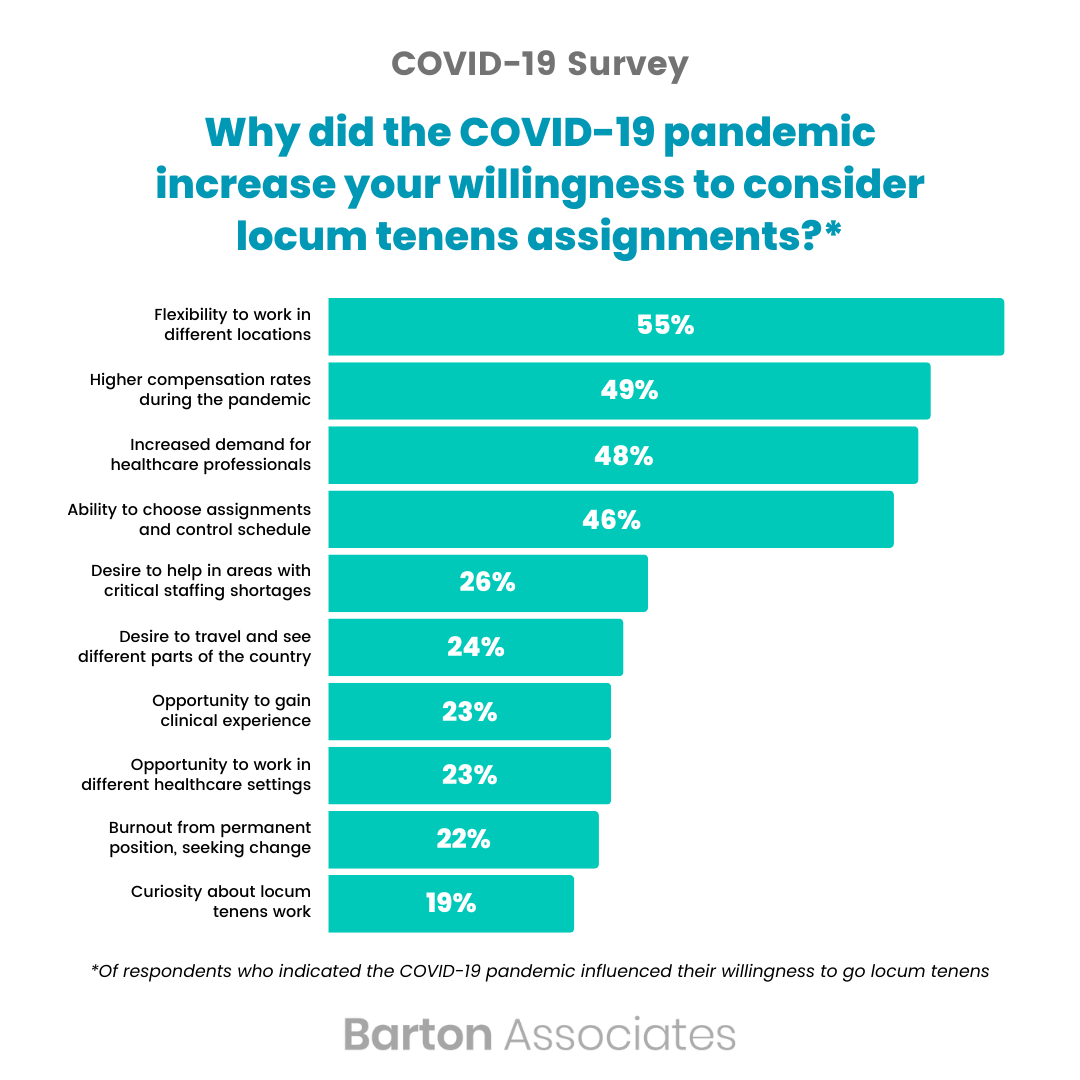
Over half (55%) of these providers (68 in total) cited “flexibility to work in different locations” as a main motivator for their decision. Other reasons for an increased willingness to consider locum tenens assignments included:
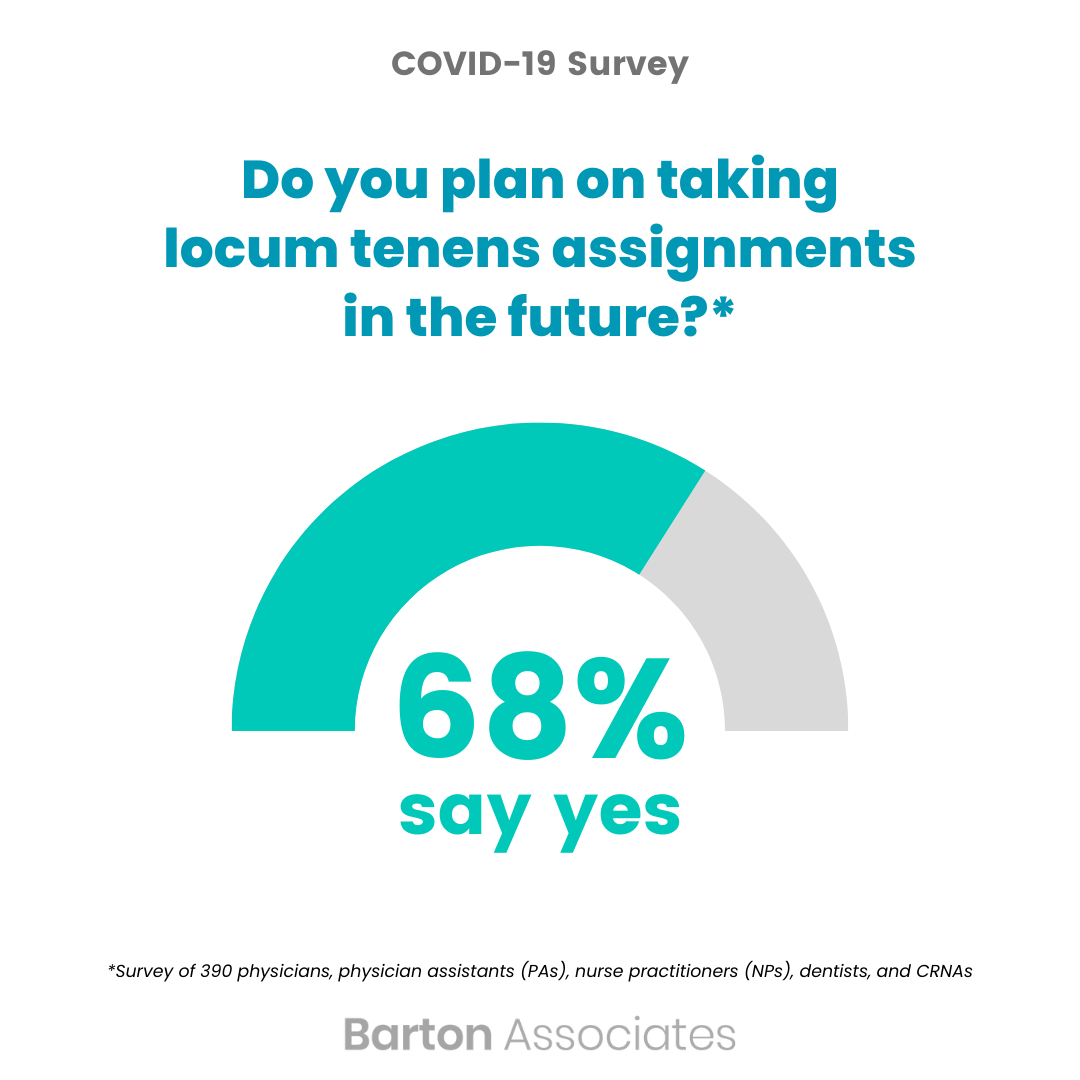
We asked all of the providers, regardless of whether or not the pandemic influenced their decision to go locum tenens, if they plan on taking a locum job in the future.
Of those respondents with an opinion, we discovered that 68% (244 respondents) said they plan on taking locum tenens assignments in the future.
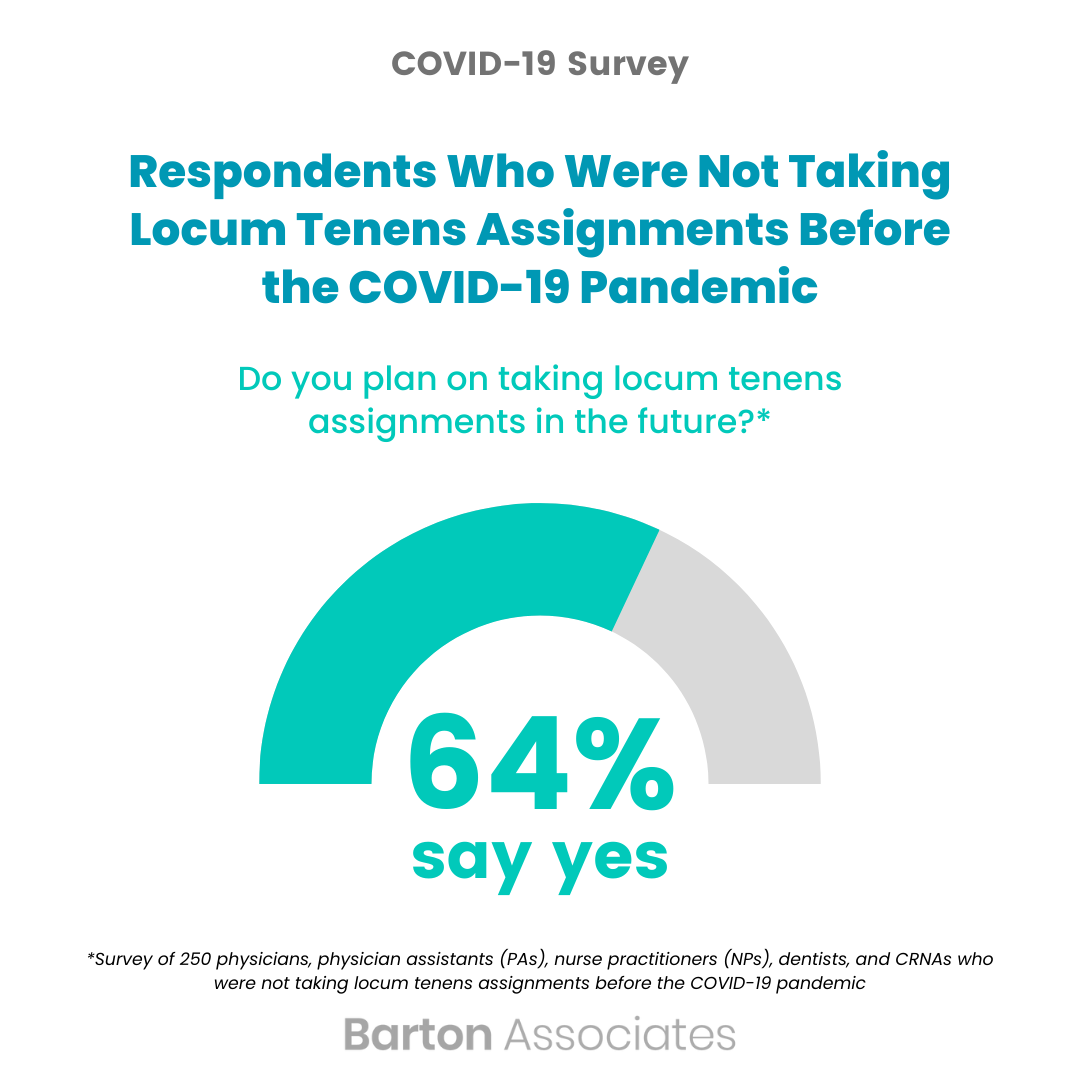
A total of 270 respondents indicated that they were not taking locum tenens assignments before the COVID-19 pandemic. Since they were not living the locum life before the pandemic struck, we were interested to hear whether or not the event impacted their decision to go locum.
Of these providers, 34% (90 respondents) said the pandemic is directly responsible for why they considered locum work, or it increased their willingness to consider locum tenens assignments.
In addition, 64% of respondents who were not taking locum tenens assignments before the pandemic and had an opinion (160 respondents) said they plan on taking locum assignments in the future.
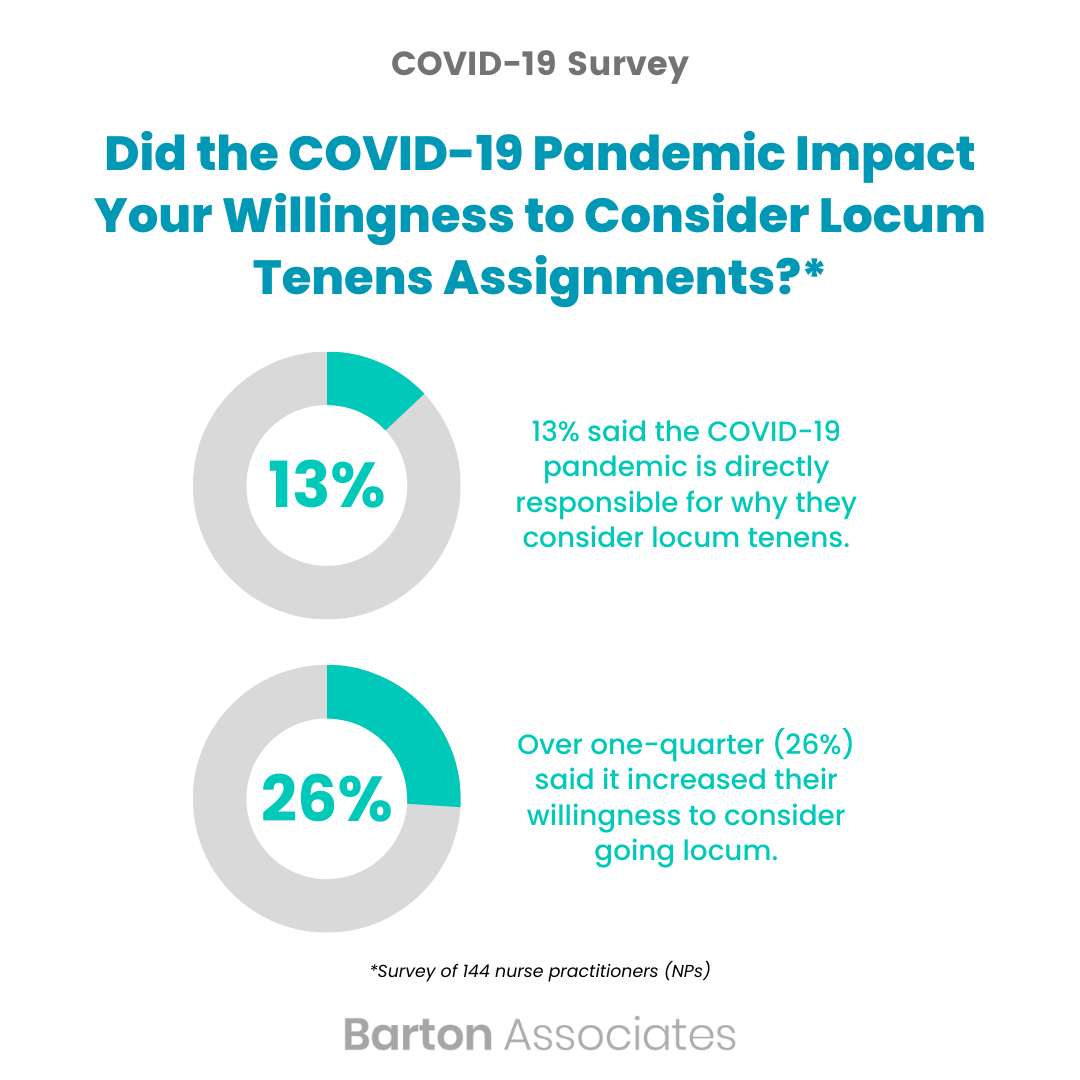
Among the 144 NPs we surveyed, we found that nearly four in every 10 (39%, or 56 respondents) said the COVID-19 pandemic influenced their interest in taking locum tenens assignments.
To break it down even further, 13% (18 respondents) said the COVID-19 pandemic is directly responsible for why they consider locum tenens, while over one-quarter (26%, or 38 respondents) said it increased their willingness to consider going locum.
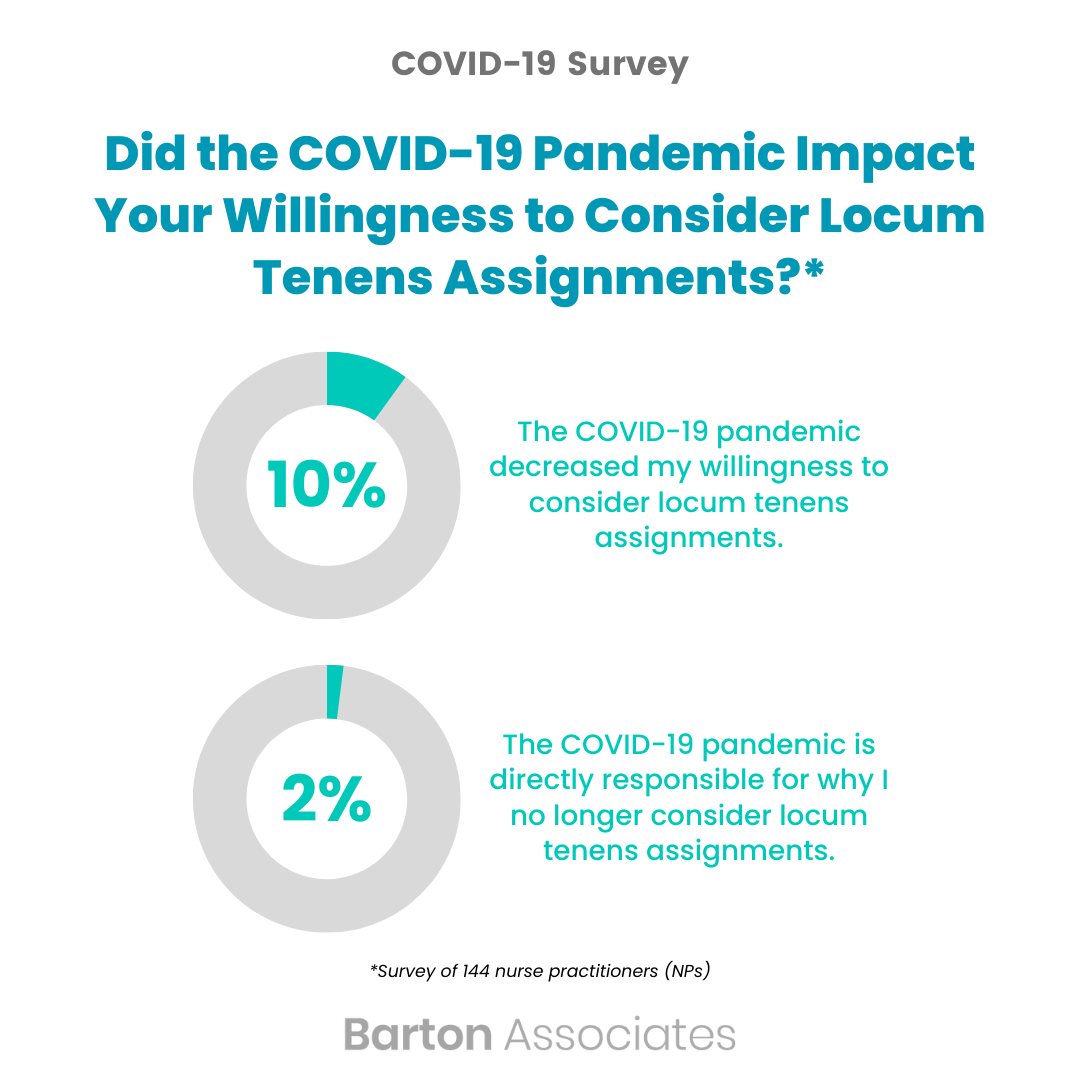
Only 10% (15 respondents) of NPs surveyed said the COVID-19 pandemic decreased their willingness to consider locum tenens assignments, while 2% (3 respondents) indicated that the pandemic is directly responsible for why they no longer consider locum tenens assignments.
Like we did for all providers, we also asked NPs who said yes to whether the COVID-19 pandemic impacted their willingness to consider locum tenens assignments exactly why they responded the way they did.
Of these two groups of NPs, the vast majority (62%, or 33 respondents) cited “flexibility to work in different locations” as the main reason why the pandemic increased their willingness to consider locum tenens assignments.
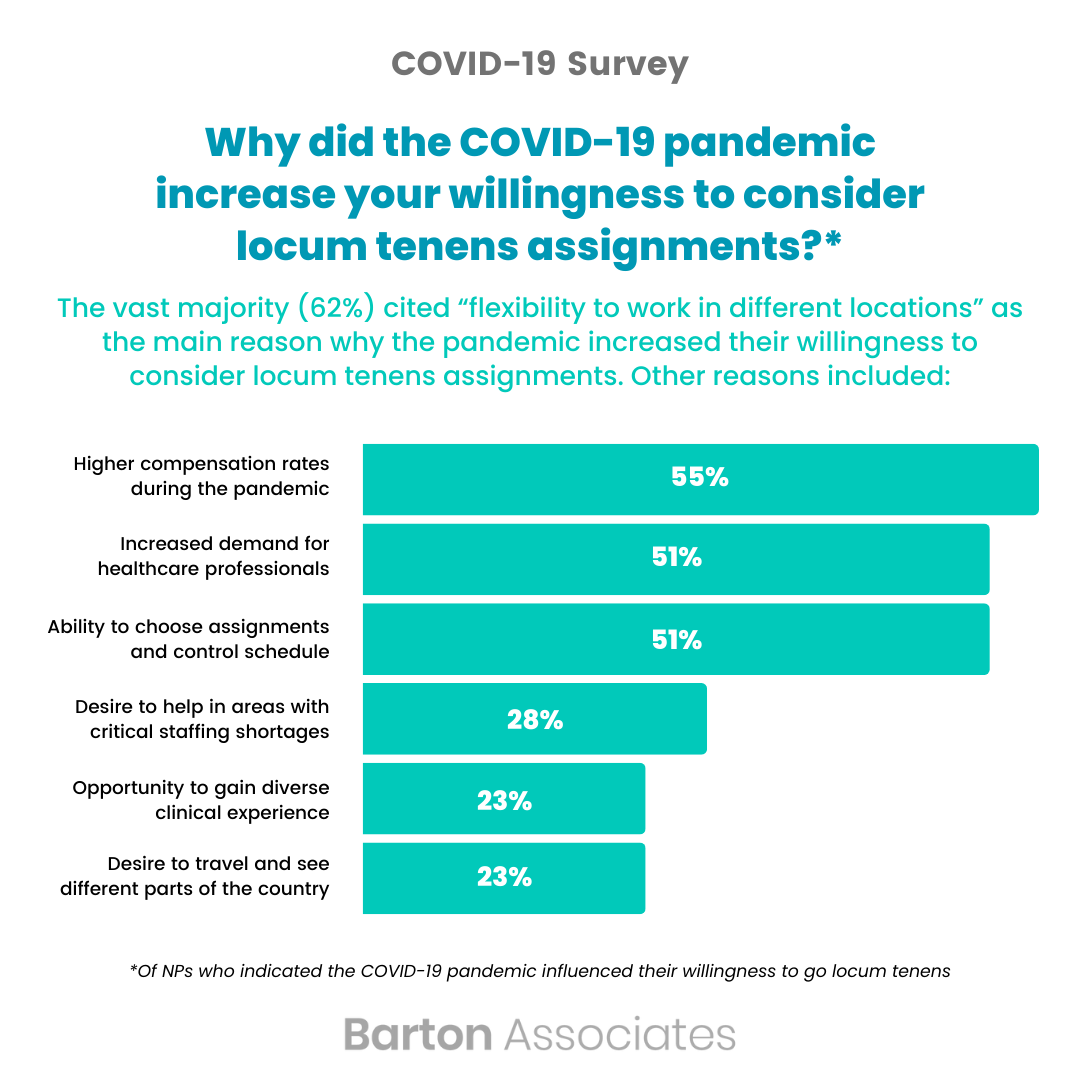
Other reasons included:
Of the NPs with an opinion, 70% (95 respondents) said they plan on taking locum tenens assignments in the future.

Of the 166 physicians we surveyed, 6% (10 respondents) said the COVID-19 pandemic is directly responsible for why they consider locum tenens, while 18% (30 respondents) said it increased their willingness to consider going locum.
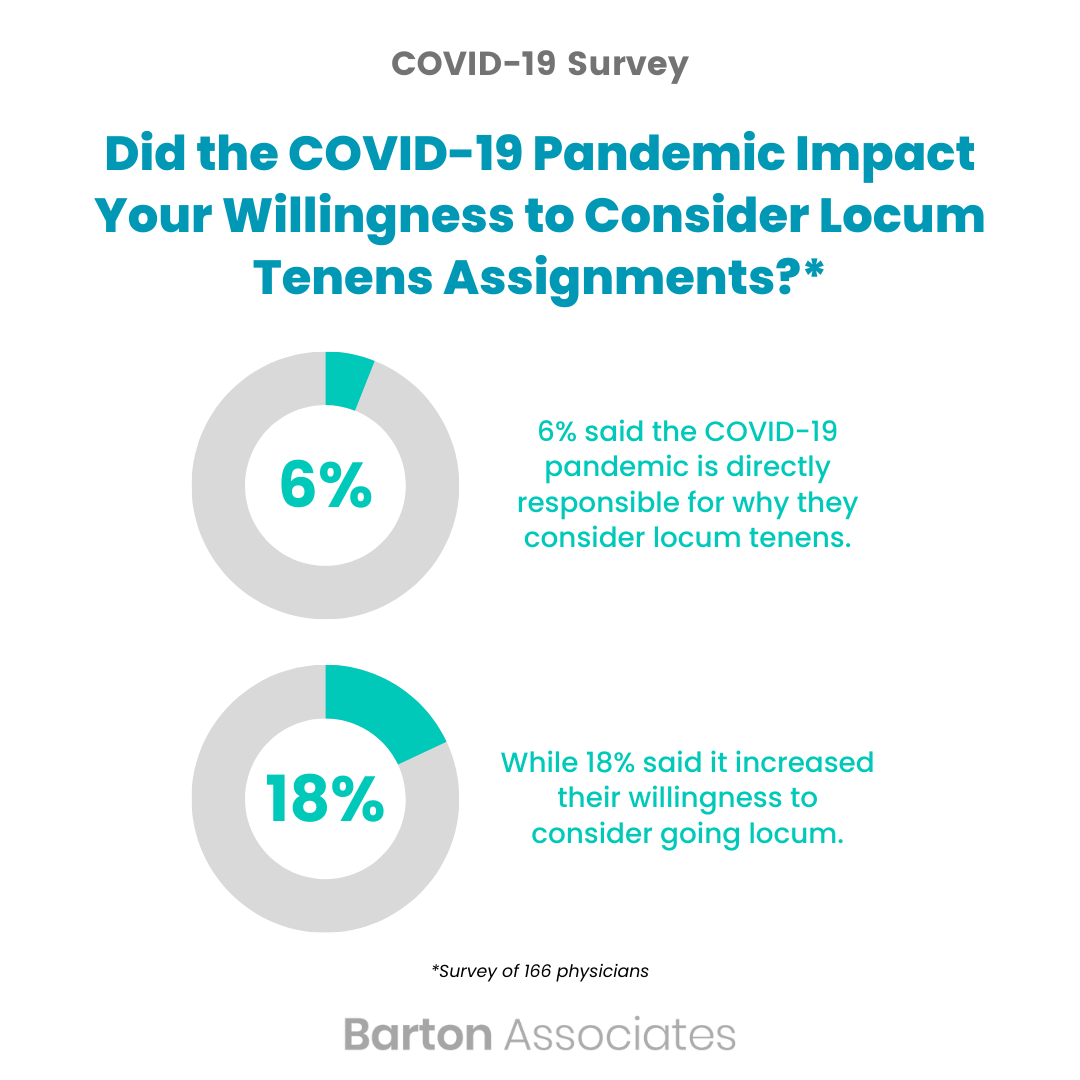
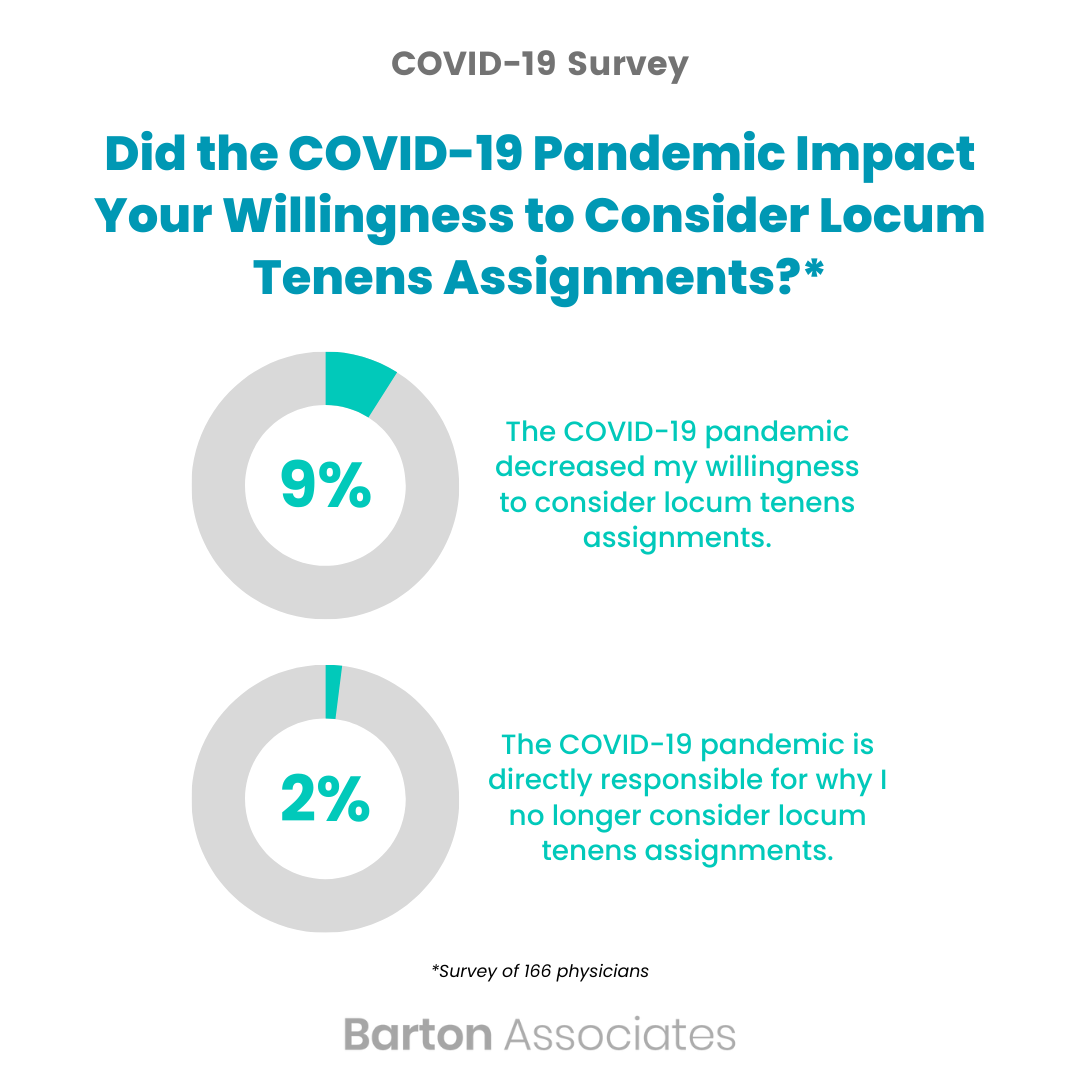
Conversely, only 9% of physicians surveyed (15 respondents) said the COVID-19 pandemic decreased their willingness to consider locum tenens assignments, while 2% (four respondents) indicated that the pandemic is directly responsible for why they no longer consider locum tenens assignments.
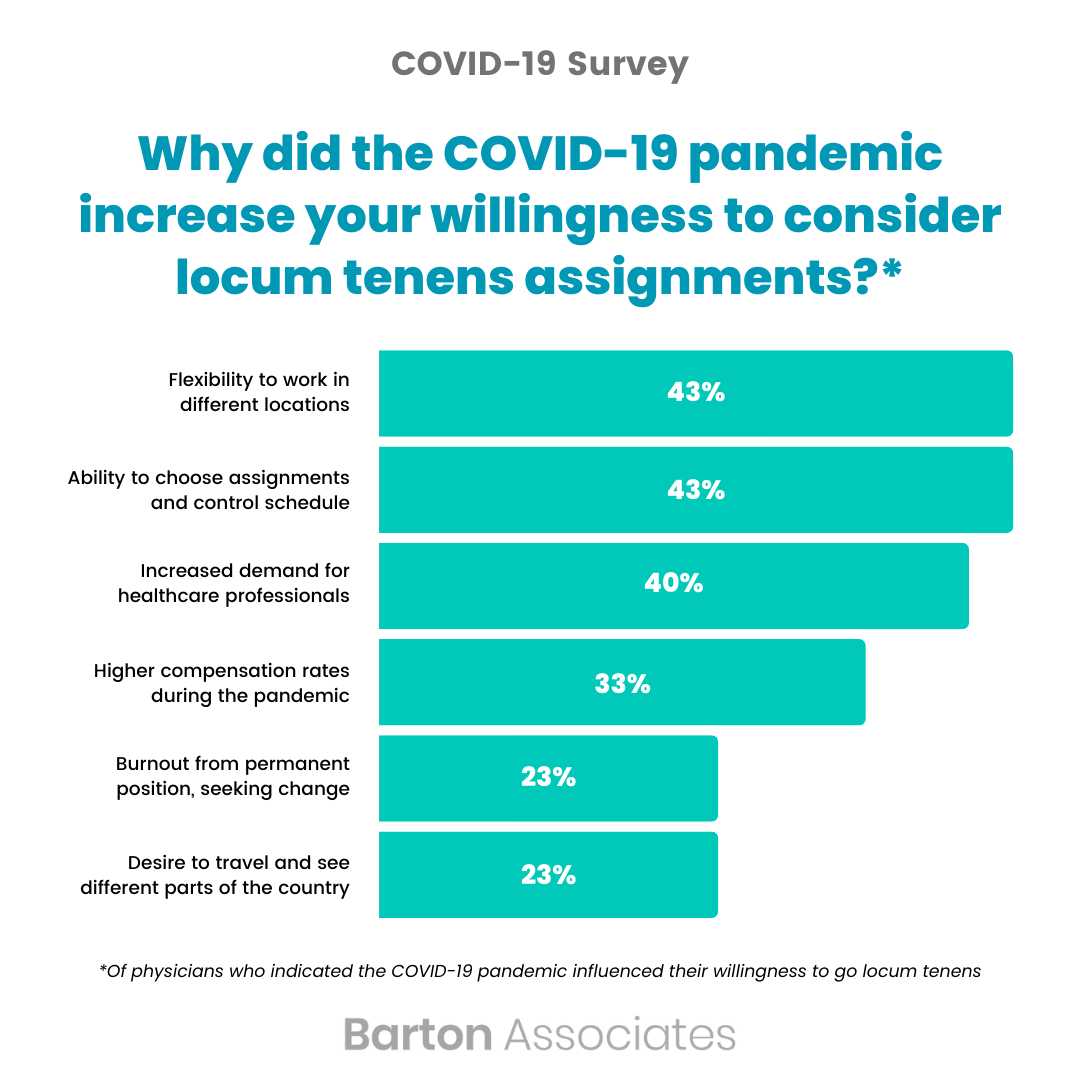
Physicians who said the COVID-19 pandemic was either directly responsible for why they consider locum tenens assignments or that it increased their willingness to consider locum tenens had varying reasons as to why they made this choice.
These two groups of physicians gave differing reasons for why the pandemic increased their willingness to consider locum tenens:
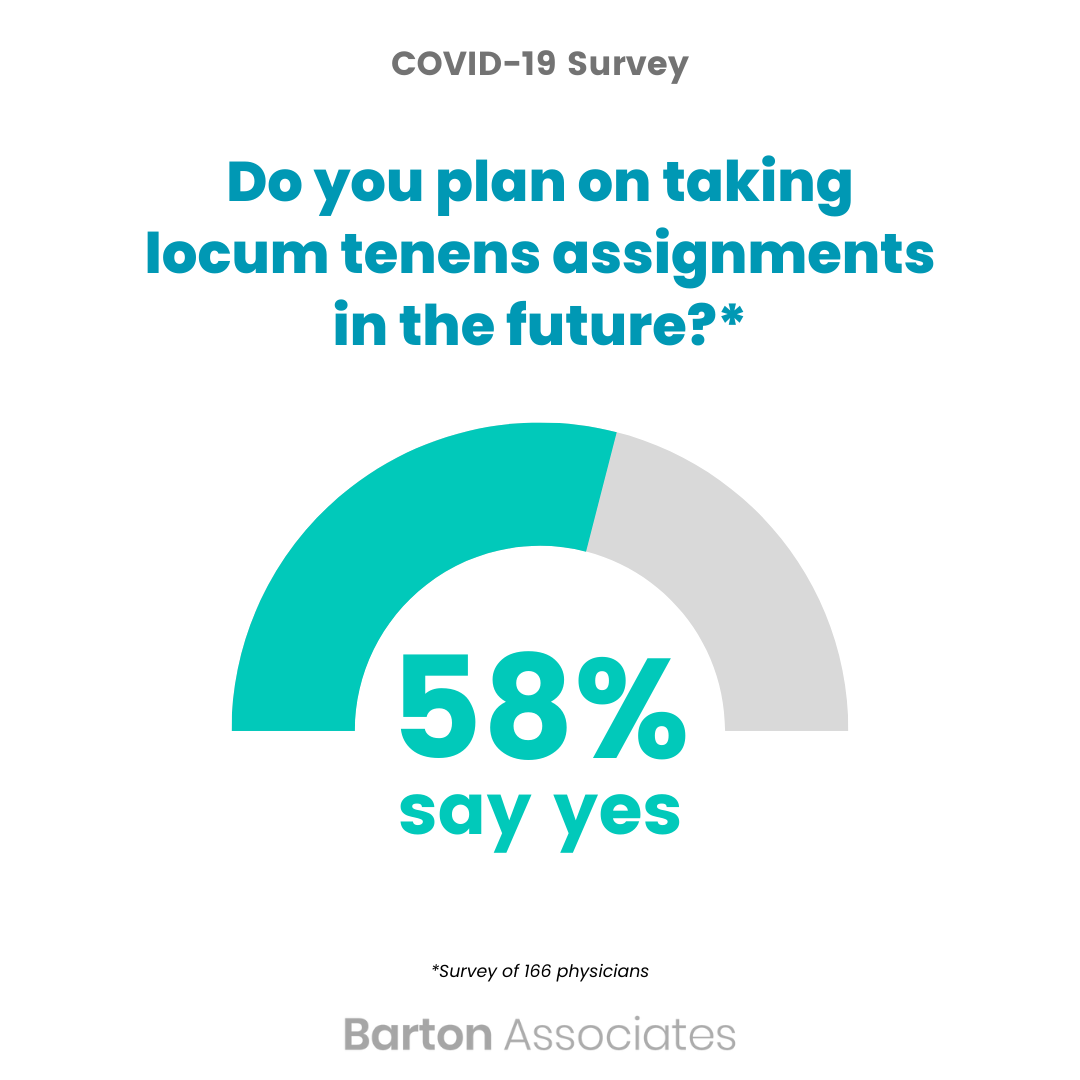
Of the physicians with an opinion, 58% (86 respondents) said they plan on taking locum tenens assignments in the future.
The survey, which was conducted on SurveyMonkey from July 28 to August 5, 2024, received responses from 390 physicians, PAs, NPs, dentists, and CRNAs in Barton Associates’ network. This included providers who currently work in permanent positions, locum tenens positions, per-diem providers, and those who are retired and unemployed.


On June 19, 1865, Union soldiers arrived in Galveston, Texas, and read aloud General Order No. 3: all enslaved people were free. The Emancipation Proclamation […]
Read Time : 4 min
 by
April Hansen 18 June, 2026
by
April Hansen 18 June, 2026 When a small, remote town loses one of the only primary care physicians, the impact doesn’t stay inside the clinic walls. Families start driving two […]
Read Time : 6 min
 by
Amanda Orta 28 May, 2026
by
Amanda Orta 28 May, 2026 Peabody, Mass. and Salt Lake City, Utah, May 6, 2026 — Barton Associates, Inc., a leading locum tenens staffing and workforce solutions organization, today announced […]
Read Time : 2 min
 by
Barton Team 6 May, 2026
by
Barton Team 6 May, 2026 In more than 80 percent of U.S. counties, access to essential healthcare services is limited. According to research from GoodRx, more than 120 million Americans, […]
Read Time : 6 min
by
Barton Team 16 March, 2026